
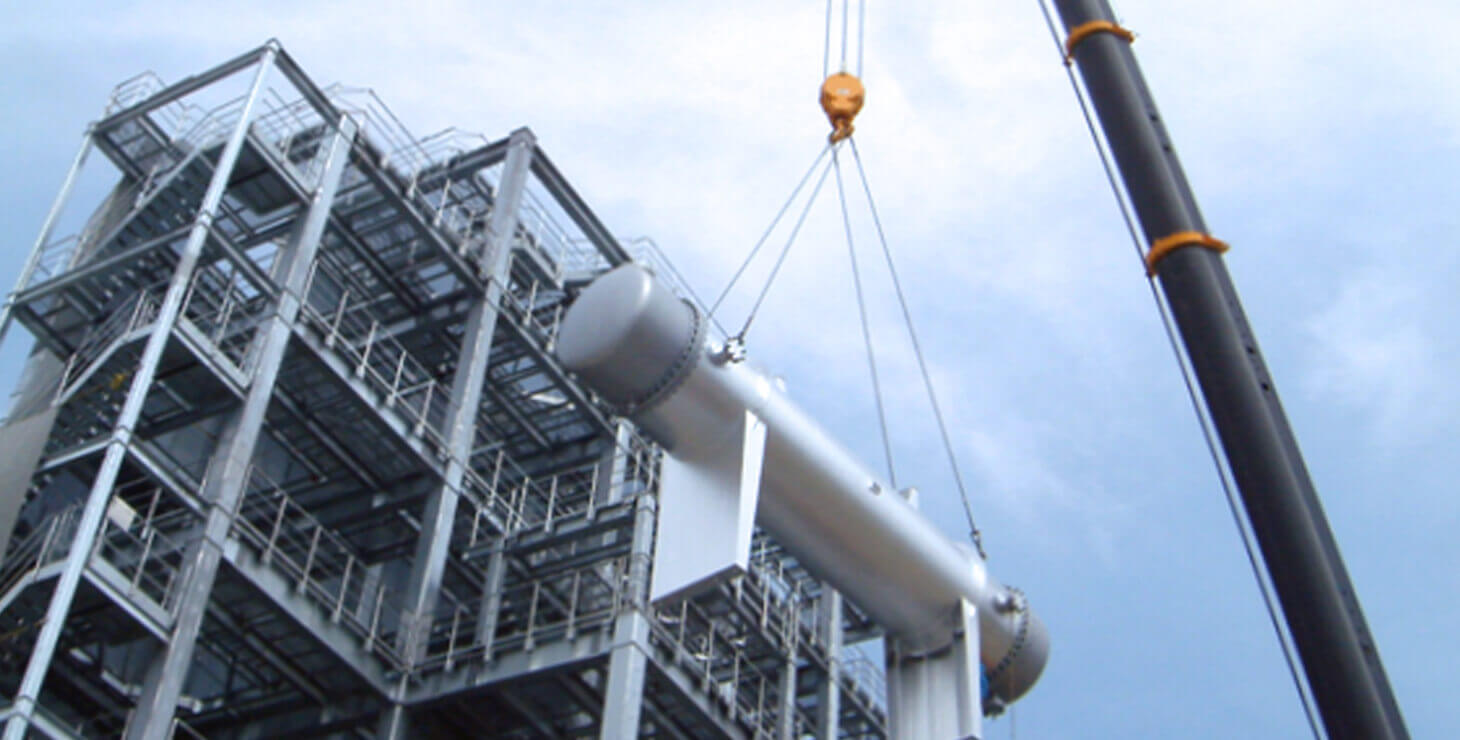
日本化学機械製造株式会社は、化学機器を自社工場にて製造できるプラントエンジニアリング企業です。
自社工場は、高圧ガス設備、圧力容器、また特殊材(耐食材料)の製作も可能で、材料手配から納入まで一括管理を行っています。プラントは様々な装置、機器類の組み合わせで構成されており、エンジニアリングには多くの知識と経験が必要とされます。
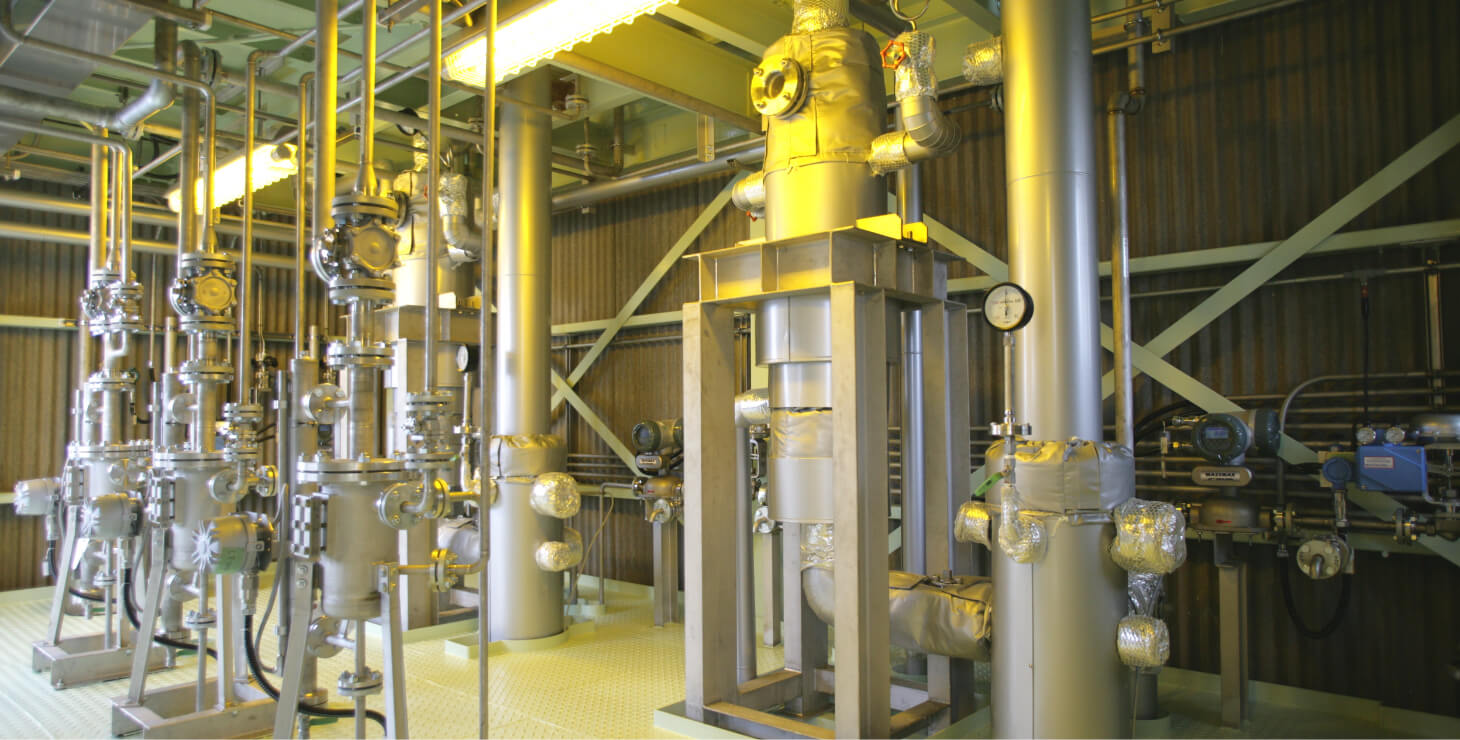
また、時代背景?外部環境の変化に伴いプラントに対するお客様のニーズも多種多様に変化しています。 設備の抱える様々な問題の解決、省エネルギー、環境対策、生産効率、品質向上、新製品生産のプロセス構築?設備計画の具現化によりお客様の事業価値向上の一助となるべく、最新の技術の開発、活用に努めております。 常にお客様の立場になり、安全で効率的な設備の構築を念頭に取り組んでおります。
-
THREE:The substantial forms of Aristotle, combining as they do the notion of a definition with that of a moving cause and a fulfilled purpose, are evidently derived from the Platonic Ideas; a reflection which at once leads us to consider the relation in which he stands to the spiritualism of Plato and to the mathematical idealism of the Neo-Pythagoreans. He agrees with them in thinking that general conceptions are the sole object of knowledge¡ªthe sole enduring reality in a world of change. He differs from them in maintaining that such conceptions have no existence apart from the particulars in which they reside. It has been questioned whether Aristotle ever really understood his master¡¯s teaching on the subject. Among recent critics, M. Barth¨¦lemy Saint-Hilaire asserts,336 with considerable vehemence, that he did not. It is certain that in some respects Aristotle is not just to the Platonic theory, that he exaggerates its absurdities, ignores its developments, and occasionally brings charges against it which might be retorted with at least equal effect against his own philosophy. But on the most important point of all, whether Plato did or did not ascribe a separate existence to his Ideas, we could hardly believe a disciple of twenty years¡¯ standing229 to be mistaken, even if the master had not left on record a decisive testimony to the affirmative side in his Parmenides, and one scarcely less decisive in his Timaeus.230 And so far as the controversy reduces itself to this particular issue, Aristotle is entirely right. His most powerful arguments are not, indeed, original, having been anticipated by Plato himself; but as they were left unanswered he had a perfect right to repeat them, and his dialectical skill was great enough to make him independent of their support. The extreme minuteness of his criticism is wearisome to us, who can hardly conceive how another opinion could ever have been held. Yet such was the fascination exercised by Plato¡¯s idealism, that not only was it upheld with considerable acrimony by his immediate followers,231 but under one form or another it has been revived over and over again, in the long period which has elapsed since its first promulgation, and on every one of these occasions the arguments of Aristotle have been raised up again to meet it, each time with triumphant success. Ockham¡¯s razor, Entia non sunt sine necessitate multiplicanda, is borrowed from the Metaphysics; Locke¡¯s principal objection to innate ideas closely resembles the sarcastic observation in337 the last chapter of the Posterior Analytics, that, according to Plato¡¯s theory, we must have some very wonderful knowledge of which we are not conscious.232 And the weapons with which Trendelenburg and others have waged war on Hegel are avowedly drawn from the Aristotelian arsenal.233
経験と実績をもとに、お客様のニーズに応じた最適な仕様?システムを構築、ご提案いたします。
-
THREE:We must now bring this long and complicated, but it is hoped not uninteresting, study to a close. We have accompanied philosophy to a point where it enters on a new field, and embraces themes sufficiently important to form the subject of a separate chapter. The contributions made by its first cultivators to our positive knowledge have already been summarised. It remains to mention that there was nothing of a truly transcendental character about their speculations. Whatever extension we may give to that terrible bugbear, the Unknowable, they did not trespass on its domain. Heracleitus and his compeers, while penetrating far beyond the horizon of their age and country, kept very nearly within the limits of a possible experience. They confused some conceptions which we have learned to distinguish, and separated others which we have learned to combine; but they were the lineal progenitors of our highest scientific thought; and they first broke ground on a path where we must continue to advance, if the cosmos which they won for us is not to be let lapse into chaos and darkness again.
工場建屋、事務所棟、倉庫、試験棟などの建設も一括してご依頼いただけます。
-
THREE:
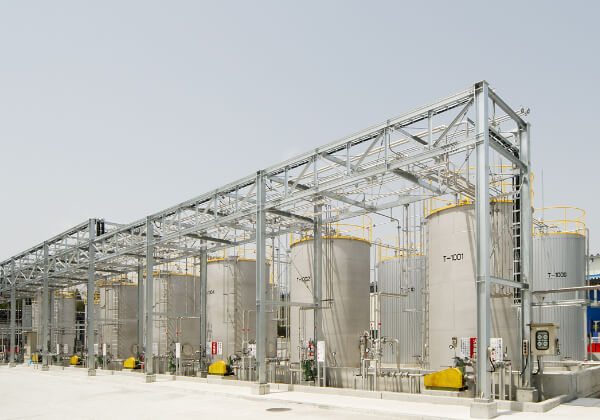
環境に配慮し、コストメリットを勘案した、省エネルギーで、省スペースな設備をご提案いたします。
-
THREE:Cores are employed mainly for what may be termed the displacement of metal in moulds. There is no clear line of distinction between cores and moulds, as founding is now conducted; cores may be of green sand, and made to surround the exterior of a piece, as well as to make perforations or to form recesses within it. The term 'core,' in its technical sense, means dried moulds, as distinguished from green sand. Wheels or other castings are said to be cast in cores when the moulds are made in pieces and dried. Supporting and venting cores, and their expansion, are conditions to which especial attention [95] is called. When a core is surrounded with hot metal, it gives off, because of moisture and the burning of the 'wash,' a large amount of gas which must have free means of escape. In the arrangement of cores, therefore, attention must be had to some means of venting, which is generally attained by allowing them to project through the sides of the mould and communicate with the air outside.The greatest of Roman orators and writers was also the first Roman that held opinions of his own in philosophy. How much original thought occurs in his voluminous contributions to the literature of the subject is more than we can determine, the Greek authorities on which he drew being known almost exclusively through the references to them contained in his disquisitions. But, judging from the evidence before us, carefully sifted as it has been by German scholars, we should feel disposed to assign him a foremost rank among the thinkers of an age certainly not distinguished either for fertility or for depth of thought. It seems clear that he gave a new basis to the eclectic tendencies of his contemporaries, and that this basis was subsequently accepted by other philosophers whose speculative capacity has never been questioned. Cicero describes himself as an adherent of the New Academy, and expressly claims to have reasserted its principles after they had fallen into neglect among the Greeks, more particularly as against his own old master Antiochus, whose Stoicising theory of cognition he agrees with Philo in repudiating.269 Like Philo also, he bases certainty on the twofold ground of a moral necessity for acting on our beliefs,270 and the existence of moral intuitions, or natural tendencies to believe in the mind itself;271 or, perhaps, more properly speaking, on the single ground of a moral sense. This, as already stated, was unquestionably a reproduction of the Platonic ideas under their subjective aspect. But in his general views about the nature and limits171 of human knowledge, Cicero leaves the Academy behind him, and goes back to Socrates. Perhaps no two men of great genius could be more unlike than these two,¡ªfor us the most living figures in ancient history if not in all history,¡ªthe Roman being as much a type of time-servingness and vacillation as the Athenian was of consistency and resolute independence. Yet, in its mere external results, the philosophy of Socrates is perhaps more faithfully reproduced by Cicero than by any subsequent enquirer; and the differences between them are easily accounted for by the long interval separating their ages from one another. Each set out with the same eager desire to collect knowledge from every quarter; each sought above all things for that kind of knowledge which seemed to be of the greatest practical importance; and each was led to believe that this did not include speculations relating to the physical world; one great motive to the partial scepticism professed by both being the irreconcilable disagreement of those who had attempted an explanation of its mysteries. The deeper ground of man¡¯s ignorance in this respect was stated somewhat differently by each; or perhaps we should say that the same reason is expressed in a mythical form by the one and in a scientific form by the other. Socrates held that the nature of things is a secret which the gods have reserved for themselves; while, in Cicero¡¯s opinion, the heavens are so remote, the interior of the earth so dark, the mechanism of our own bodies so complicated and subtle, as to be placed beyond the reach of fruitful observation.272 Nor did this deprivation seem any great hardship to either, since, as citizens of great and free states, both were pre-eminently interested in the study of social life; and it is characteristic of their common tendency that both should have been not only great talkers and observers but also great readers of ancient literature.273
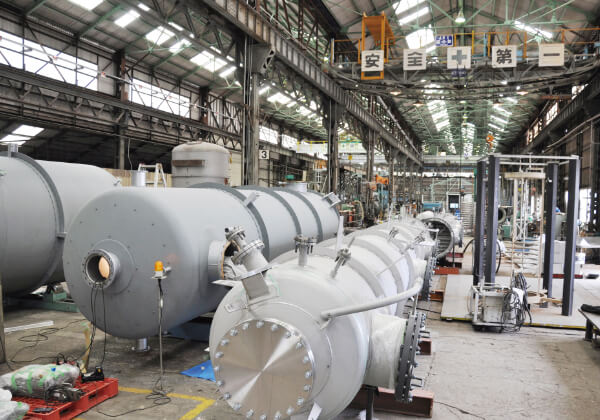
高圧ガス設備、圧力容器の製造資格を持った自社工場での製作により、品質、納期を管理しております。
-
THREE:"Something of that kind," she said. "My friend Mr. Balmayne was bringing my motor back when he found this poor fellow unconscious in the lane. Mr. Balmayne called out to me for assistance and I fortunately heard."
コストを積算し、見積価格をご提示します。回収期間法などの設備投資の経済性計算をお客様とご一緒にシミュレーションすることも可能です。
-
THREE:
化学工場への納入実績が多く、各種法規にも精通しています。官庁申請書類の作成もサポートいたします。
-
THREE:
社内に様々なテスト装置をそろえておりますので、事前の検証も可能です。
新製品の生産プロセスの構築もご相談ください。
プラントの計画時から、設計、調達、建設、試運転、更には完成後のメンテナンスに至るまでトータルに対応いたします。当社は機器製作工場を所有しておりますので、細やかな機器設計?製作が可能です。
-
 FORE:On the horizon, coming at moderate speed, but growing large enough so that there could be no error of identification, came the amphibian. Its dun color and its tail marking were unmistakable.
工場建設、プラント新設の計画の立案には、大きな労力を要します。当社では、お客様の一助となるべく、官庁届け出の助成を行いながら、工場建設を進め、抱えておられる問題の解決に取り組んでおります。
-
 FORE:Among the most interesting of Plutarch¡¯s religious writings is one entitled On the Delays in the Divine Vengeance. As might be expected from the name, it deals with a problem closely akin to that which ages before had been made the subject of such sublime imagery and such inconclusive reasoning by the author of the Book of Job. What troubled the Hebrew poet was the apparently undeserved suffering of the just. What the Greek moralist feels himself called on to explain is the apparent prosperity and impunity of the wicked. He will not for a moment admit that crime remains unavengeful; his object is to show why the retribution does not follow directly on the deed. And, in order to account for this, he adduces a number of very ingenious reasons. By acting deliberately rather than in blind anger, the gods wish to read us a useful lesson in patience and forbearance. Sometimes their object is to give the sinner an opportunity for repentance and amendment; or else they may be holding him in reserve for the performance of some beneficial work. At other times, their justice is delayed only that it may be manifested by some signal and striking form of retribution. In many cases, the final stroke has been preceded by long years of secret torment; and even where no suffering seems to be inflicted, the pangs of remorse may furnish a sufficient expiation. Or again, vengeance may be reserved for a future generation. Some persons hold that to267 visit the sins of the fathers on the children is unjust, but in this they are profoundly mistaken. Members of the same family and citizens of the same state are connected as parts of one organic whole; sharing in the benefits which accrue from the good deeds of their predecessors, it is right that they should also share in the responsibility for their crimes. Moreover, the posterity of the wicked inherit a sinful disposition which, as the gods can clearly foresee, would betray itself in overt acts were they not cut off in their youth. And it is equally an error to suppose that the original wrongdoers remain unaffected by the retribution which befalls their descendants. On the contrary, they witness it from the next world, where it adds poignancy to their remorse, and entails on them fresh penalties over and above those which they have already been doomed to suffer."Well, there is a huge fire yonder; everything is burning!"
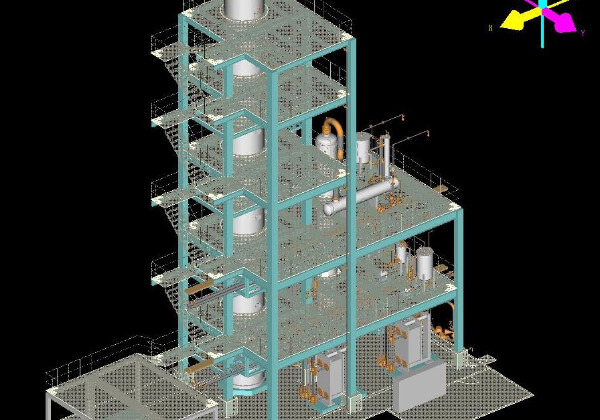
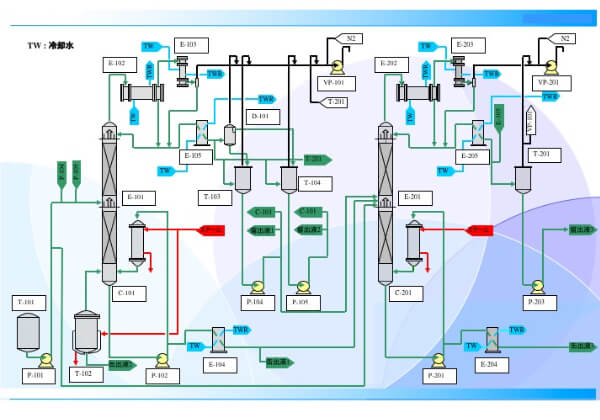
主要機器等の仕様を決定し、プラントの基本フローや配置を決定します。
-
 FORE:We perceive a precisely similar change of tone on comparing the two great historians who have respectively recorded the struggle of Greece against Persia, and the struggle of imperial Athens against Sparta and her allies. Though born within fifteen years of one another, Herodotus and Thucydides are virtually separated by an interval of two generations, for while the latter represents the most advanced thought of his time, the former lived among traditions inherited from the age preceding his own. Now, Herodotus is not more remarkable for the earnest piety than for the clear sense of justice which runs through his entire work. He draws no distinction between public and private morality. Whoever makes war on his neighbours without provocation, or rules without the consent of the governed, is, according to him, in the wrong, although he is well aware that such wrongs are constantly committed. Thucydides knows nothing74 of supernatural interference in human affairs. After relating the tragical end of Nicias, he observes, not without a sceptical tendency, that of all the Greeks then living, this unfortunate general least deserved such a fate, so far as piety and respectability of character went. If there are gods they hold their position by superior strength. That the strong should enslave the weak is a universal and necessary law of Nature. The Spartans, who among themselves are most scrupulous in observing traditional obligations, in their dealings with others most openly identify gain with honour, and expediency with right. Even if the historian himself did not share these opinions, it is evident that they were widely entertained by his contemporaries, and he expressly informs us that Greek political morality had deteriorated to a frightful extent in consequence of the civil discords fomented by the conflict between Athens and Sparta; while, in Athens at least, a similar corruption of private morality had begun with the great plague of 430, its chief symptom being a mad desire to extract the utmost possible enjoyment from life, for which purpose every means was considered legitimate. On this point Thucydides is confirmed and supplemented by the evidence of another contemporary authority. According to Aristophanes, the ancient discipline had in his time become very much relaxed. The rich were idle and extravagant; the poor mutinous; young men were growing more and more insolent to their elders; religion was derided; all classes were animated by a common desire to make money and to spend it on sensual enjoyment. Only, instead of tracing back this profound demoralisation to a change in the social environment, Aristophanes attributes it to demagogues, harassing informers, and popular poets, but above all to the new culture then coming into vogue. Physical science had brought in atheism; dialectic training had destroyed the sanctity of ethical restraints. When, however, the religious and virtuous Socrates is put forward as a type of both tend75encies, our confidence in the comic poet¡¯s accuracy, if not in his good faith, becomes seriously shaken; and his whole tone so vividly recalls the analogous invectives now hurled from press and pulpit against every philosophic theory, every scientific discovery, every social reform at variance with traditional beliefs or threatening the sinister interests which have gathered round iniquitous institutions, that at first we feel tempted to follow Grote in rejecting his testimony altogether. So far, however, as the actual phenomena themselves are concerned, and apart from their generating antecedents, Aristophanes does but bring into more picturesque prominence what graver observers are content to indicate, and what Plato, writing a generation later, treats as an unquestionable reality. Nor is the fact of a lowered moral tone going along with accelerated mental activity either incredible or unparalleled. Modern history knows of at least two periods remarkable for such a conjunction, the Renaissance and the eighteenth century, the former stained with every imaginable crime, the latter impure throughout, and lapsing into blood-thirsty violence at its close. Moral progress, like every other mode of motion, has its appropriate rhythm¡ªits epochs of severe restraint followed by epochs of rebellious license. And when, as an aggravation of the reaction from which they periodically suffer, ethical principles have become associated with a mythology whose decay, at first retarded, is finally hastened by their activity, it is still easier to understand how they may share in its discredit, and only regain their ascendency by allying themselves with a purified form of the old religion, until they can be disentangled from the compromising support of all unverified theories whatever. We have every reason to believe that Greek life and thought did pass through such a crisis during the second half of the fifth century B.C., and we have now to deal with the speculative aspects of that crisis, so far as they are represented by the Sophists.
設備の構成要素の詳細な仕様や配置を決定し、図面を作成します。
-
 FORE:"Lalage," Bruce cried. "The Spanish--and the same name! Why, that is the same woman who received me on that fatal night at the corner house!"
詳細設計に基づきポンプや部品類の購入品の調達先を選定し、発注します。
プラントを構成する主要な機器は特注製作が多く、材料発注、製作、各種検査、運搬まで工程、納期を管理します。 -
 FORE:Dinant offered a terrible sight; it no longer existed. On foot, of course, we walked along the place where a large shop once stood, but one could not even distinguish where the road had been. Not one street was left, and the few houses that were saved are not in the centre of the town. On a slope on the left bank of the Meuse there had been two large monasteries, which had been turned into hospitals. They had been wrecked completely by gun-fire, and as if in bitter mockery at the cruel fate, the Red Cross flags flew there still undamaged.I was not afraid of an inquiry, but asked for it as a matter of fact, by writing in my report:¡ª
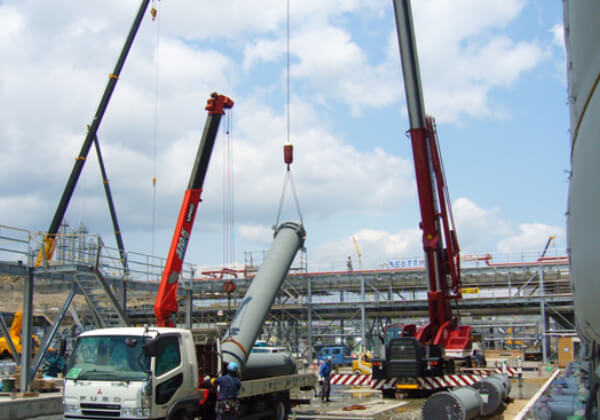
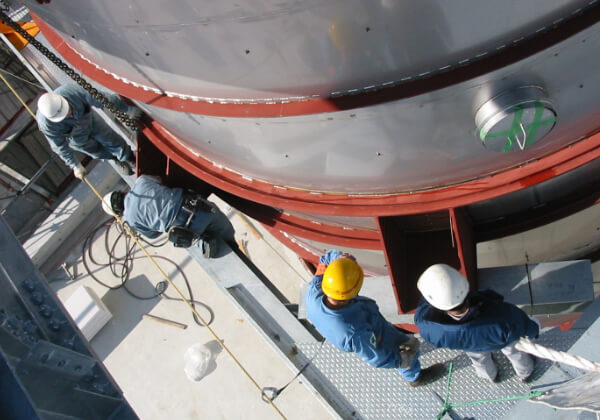
安全を第一に、管理技術者が責任を持って施工、工程、品質の管理を行いながら協力会社と連携し進めていきます。
土木?建築、機器据付、配管、電気?計装、断熱などの工事があります。 -
 FORE:"He was my patient," Bruce said hoarsely. "I was with him at daybreak."
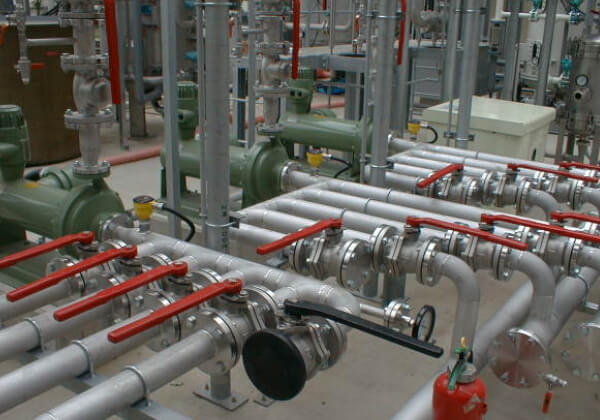
プラント完成後、性能が出るか試運転を行って確認、調整を行います。
きめ細やかな運転指導により実運転へのスムースな移行を促します。完成図書と共にお引渡しとなります。
運転?保守フェーズ
-
 FORE:¡°But there¡¯s no gas,¡± objected Larry, noting the indicator in the control cockpit. ¡°See, the meter says zero!¡±
プラント、機器の安全と安定稼働のために、定期的なメンテナンスをお薦めいたします。
-
 FORE:The triumph of Stoicism was, however, retarded by the combined influence of the Academic and Peripatetic schools. Both claimed the theory of a morality founded on natural law as a doctrine of their own, borrowed from them without acknowledgment by the Porch, and restated under an offensively paradoxical form. To a Roman, the Academy would offer the further attraction of complete immunity from the bondage of a speculative system, freedom of enquiry limited only by the exigencies of practical life, and a conveniently elastic interpretation of the extent to which popular faiths might be accepted as true. If absolute suspense of judgment jarred on his moral convictions, it was ready with accommodations and concessions. We have seen how the scepticism of Carneades was first modified by Philo, and then openly renounced by Philo¡¯s successor, Antiochus. Roman170 influence may have been at work with both; for Philo spent some time in the capital of the empire, whither he was driven by the events of the first Mithridatic War; while Antiochus was the friend of Lucullus and the teacher of Cicero.268"Because there was one who hated him. I cannot and will not say any more than that. He stood in the way of somebody. So long as he kept away it was all right. But Leon was not one of that sort. He was as brave as a lion. Had he not been so fond of the drink he might have done anything. But there was something in the blood of both of us that took us into evil ways. Thank God our mother is dead, the flower farm gone, and the secret of the wonderful perfume that made the name of Lalage famous for two centuries is buried in my mother's grave."
生産量を減らすことなく、生産能力を増強するなど、お客様のご要望にお応えできるソリューションをご提案いたします。
お客様のプロセスノウハウと当社の固有技術の融合によって最適化、効率化、さらには環境に優しい設備を実現をいたします。海外現地法人(タイ、ベトナム)におきましても同等のエンジニアリングが提供できるように、本社の技術者と連携し管理いたしております。
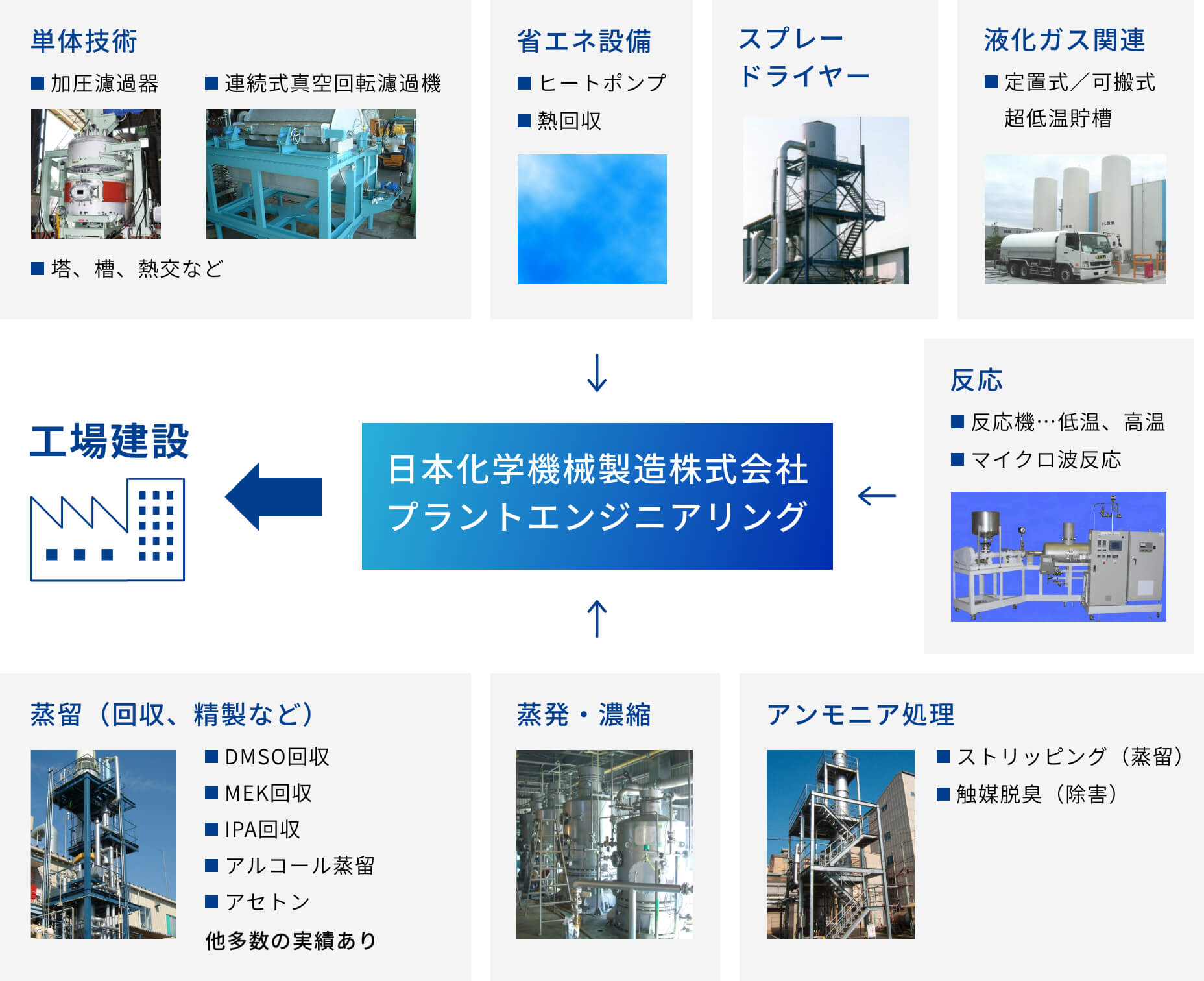
※これ以外にも様々な単位操作装置、単体機器製作ができます。
| 業種?分野 | プラント?設備名称 | 構成プロセス | 付帯設備?工事施工 |
|---|---|---|---|
| ファインケミカル | IT関連化学品プラント | 反応プロセス ろ過分離プロセス 乾燥プロセス |
クリーンルーム、充填、タンクヤード、 ユーティリティ、消火?防火設備、 土木?建築、計器?計装工事、 電気工事 |
| 食品工業 | 澱粉工場 | 反応プロセス 分離プロセス 精製プロセス 脱水?乾燥プロセス |
タンクヤード、ユーティリティ、 消火?防火設備、土木?建築、 計器?計装工事、電気工事、 原料受入?貯蔵設備、計量?包装設備 |
| 化学工業 | 合成樹脂工場 > | 反応プロセス 蒸留プロセス 濾過分離プロセス 乾燥プロセス |
タンクヤード、ユーティリティ、 供給設備、充填、自動倉庫、 焼却設備、出荷設備 |
| 食品工業 | 糖化工場 > (異性化糖類製造設備) |
液化?糖化プロセス 濃縮プロセス 濾過?精製プロセス |
タンクヤード、ユーティリティ、 土木?建築、計器?計装工事、 電気工事 |
| 環境?リサイクル | 溶剤回収プラント | 濃縮?調整プロセス 蒸留プロセス |
タンクヤード、計量設備、 ユーティリティ、消火?防火設備、 計器?計装工事、電気工事、 原料受入?貯蔵?出荷設備 |
| 無機化学工業 | 触媒製造プラント (自動車用) |
調合プロセス コーティングプロセス 焼成プロセス |
ロボット搬送システム、 原料調整?供給装置 |
| 無機化学工業 | 二次電池用原料 精製プラント |
調整プロセス 反応プロセス 分離?濃縮プロセス 蒸留プロセス |
タンクヤード、ユーティリティ、 土木?建築、空調設備、集塵?局所排気、 計器?計装工事、 電気工事、貯蔵設備、計量?包装設備 |
| 新エネルギー | バイオエタノール 大型実証モデルプラント > |
蒸留プロセス 脱水プロセス |
計器?計装工事、電気工事 |
| 無機化学工業 | 水素回収設備 | 水素回収プロセス | タンクヤード、冷却システム、 計器?計装工事 |